







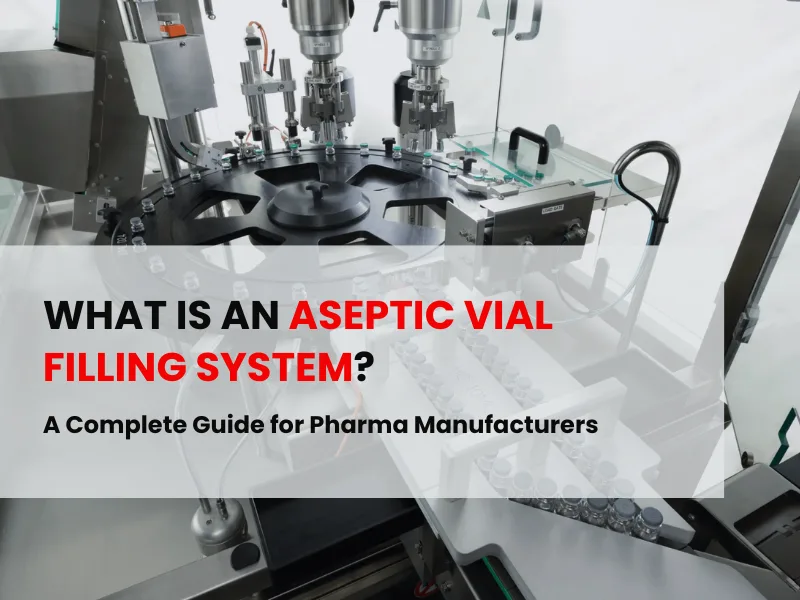
What Is an Aseptic Vial Filling System? A Complete Guide for Pharma Manufacturers
Aseptic vial filling is one of the most critical steps in sterile pharmaceutical manufacturing. Even microscopic contamination can compromise patient safety, trigger batch rejection, and cause costly delays. This is why pharmaceutical companies rely on aseptic vial filling systems — equipment designed to maintain a contamination-free environment from start to finish.
If you manufacture sterile injectables, biologics, ophthalmic solutions, vaccines, or any high-value small-volume liquids, this guide explains what an aseptic vial filling system is, how it works, and what features matter when selecting a machine.
What Is an Aseptic Vial Filling System?
An aseptic vial filling system is a specialised machine used to fill sterile medications into vials under ISO 5 (Class 100) unidirectional airflow.
Unlike terminal sterilisation, aseptic processing requires sterility to be maintained continuously across:
- Equipment
- Operators
- Materials
- Controlled environments
These machines are essential for heat-sensitive or biologic-based products such as:
- Vaccines
- Biologics
- Sterile injectables
- Ophthalmic drugs
- Cytotoxic formulations
Why Aseptic Filling Matters for Pharma Manufacturers
Pharma companies choose aseptic filling when:
- The product cannot withstand terminal sterilisation
- The formulation is temperature-sensitive (e.g., proteins, biologics)
- The medication must retain high purity and stability
- Regulatory compliance (GMP, PIC/S, EU Annex 1) requires strict contamination control
A high-quality aseptic filling machine ensures:
- Consistent filling accuracy (critical for low-volume vials)
- Reduced human interaction (lower contamination risk)
- Higher batch yield
- Traceability & compliance
- Scalability for commercial production
How an Aseptic Vial Filling System Works (Step-by-Step Process)
Here’s how most sterile vial filling lines operate:
Step 1: Vial Washing
Removal of particles and residues using WFI (Water for Injection) and air.
Step 2: Depyrogenation Tunnel
Pre-washed vials pass through a high-temperature tunnel (typically 250°C+) to remove endotoxins.
Step 3: Sterile Filling
Liquid medication is filled using:
- Peristaltic pumps
- Rotary piston pumps
- Time-pressure filling
Filling accuracy is essential for expensive APIs and biologics.
Step 4: Stoppering
A sterile rubber stopper is inserted immediately after filling to seal the vial.
Step 5: Capping
The vial receives an aluminium cap to secure the stopper.
Step 6: Inspection & Reject System
Cameras verify fill level, stopper position, cap quality, particles, and defects.
Step 7: Labelling & Packaging
Final vials move into packaging under controlled conditions.
Key Components of a Modern Aseptic Vial Filling Machine
High-performance pharmaceutical filling systems include components such as:
- RABS or Isolator System
Provides barrier protection to maintain ISO 5 conditions. - HEPA Filtration
Ensures clean air during filling and stoppering. - CIP/SIP Capabilities
Clean-in-place and sterilise-in-place reduce human intervention. - Servo-driven Filling Pumps
Enable precise, repeatable filling with minimal product loss. - Non-Contact Sensors
Monitor stopper presence, vial position, and fill accuracy. - Automatic Infeed & Outfeed Systems
Improves productivity and reduces manual handling.
Types of Aseptic Vial Filling Systems
Different configurations exist depending on batch size and product type:
1. Linear Aseptic Filling Machine
Ideal for medium- to high-speed production.
2. Rotary Filling Machine
Designed for high-volume manufacturing with very high throughput.
3. Small-Batch/Clinical Trial Aseptic Fillers
For R&D, stability studies, and personalised medicines.
4. Flexible Isolator-Based Filling Lines
Supports multiple formats:
- vials
- cartridges
- syringes
- RTU (ready-to-use) containers
Choosing the Right Aseptic Vial Filling System: What Buyers Care About
When pharma teams compare suppliers, these are the real concerns they search for:
- Filling Accuracy & Repeatability
Even a 0.01 mL difference matters when filling biologics. - Contamination Control Strategy
Isolator vs. RABS, airflow design, material transfer ports, glove ports. - Compatibility with RTU (Ready-to-Use) Vials
More manufacturers prefer RTU systems to reduce sterilisation workload. - Cleanability & Sterility Assurance
Reliable SIP/CIP performance with validation documents. - Flexibility for Multiple Products
Important for CMOs, CDMOs, and pharma with multiple SKUs. - After-sales Support & Spare Parts Availability
Critical to avoid downtime. - Compliance with GMP, PIC/S, EU Annex 1
Especially for Malaysian pharma manufacturers aiming for export markets.
Applications of Aseptic Filling
These systems are used across pharmaceutical and biotech manufacturing:
- Injectables (IV, IM, SC)
- Vaccines
- Antibiotics
- Ophthalmic drops
- Oncology drugs
- Hormones
- Cell & gene therapy
- Sterile biologics
Is Aseptic Filling Suitable for Your Manufacturing Needs?
Aseptic filling is recommended if your product:
- Is heat-sensitive
- Is biologic-based
- Requires high sterility assurance
- Has low allowable endotoxin levels
- Has tight dosage tolerance
- Needs flexible batch production
Manufacturers producing oral liquid filling systems, injectable powder dosing systems, and eye drop filling machines can also integrate aseptic modules depending on product requirements.
Conclusion
Aseptic vial filling systems are essential for sterile pharmaceutical production, especially for vaccines, biologics, injectables, and ophthalmic drugs.
Understanding how these systems work and the features that drive sterility, precision, and compliance helps manufacturers make informed decisions when selecting the right equipment for long-term growth.
Upgrade Your Sterile Filling Operations Today
Ensure precision, compliance, and efficiency with MH Multipack’s aseptic vial filling systems. Contact our team for expert advice, customised solutions, or a demonstration to see how we can optimise your production line.
Disclaimer:
The information provided in this article is for general informational purposes only. Readers are encouraged to consult with a qualified industry professional or contact MH Multipack for advice specific to their operations, regulatory compliance, or equipment needs. While we strive to provide accurate and up-to-date information, we cannot guarantee they are entirely error-free. MH Multipack Sdn Bhd assumes no responsibility for any errors or omissions.